Chargers Slot Receiver
In general, the X receiver is the split end and often (but not always) the most talented all-around receiver. He lines up wide of the formation and on the line of scrimmage. The X cannot go in motion pre-snap, and because of that, he’s often more exposed to press coverage at the line than the Z or the slot (the ‘Y’).
- Although he lines up all across the formation, Allen is the primary slot receiver for the Chargers. This week, the Jets lost starting slot defender Brian Poole (knee, IR), who is their best corner. Filling in for Poole will be fourth-year undrafted journeyman and special-teamer Arthur Maulet, who has allowed a 76.4% catch rate in his career.
- Cooper Kupp has far outperformed his draft slot after being a third-round pick in 2017. In three seasons, he’s already caught 196 passes for 2,596 yards and 21 touchdowns. He’s one of 11 players in.
- “The slot receiver’s kind of the quarterback of the receivers,” he said in 2015. “More so because the slot receiver has more responsibilities in terms of reading coverages and different adjustments based on what coverages you’re seeing. It’s a lot more complicated. You have to know a lot more.
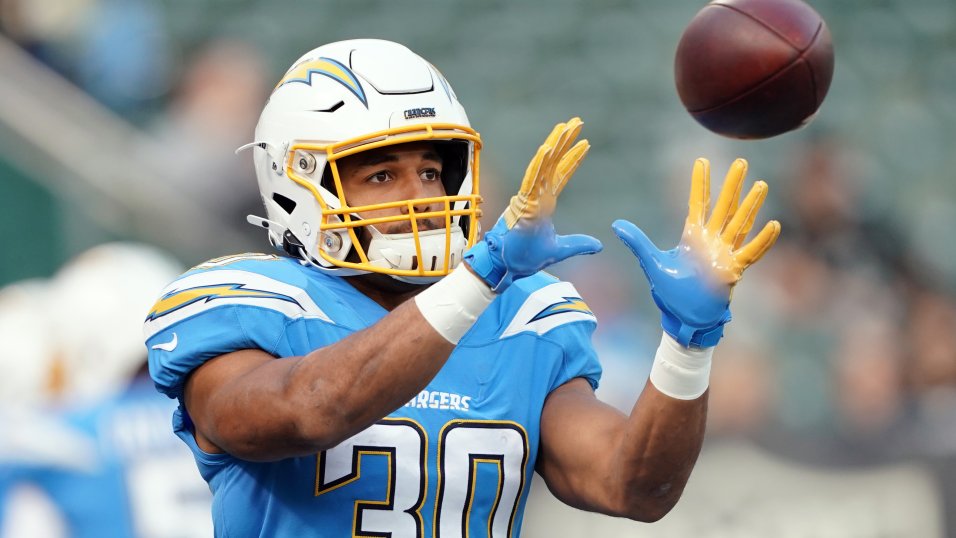
We are weeks away until training camp, where a handful of positional battles will unfold. Among the crop that will draw a lot of attention is the clash for the third wide receiver spot behind Keenan Allen and Mike Williams.

The Chargers have a few that will be in contention for this job, which include Andre Patton, Darius Jennings, Jalen Moore and rookies Joe Reed and K.J. Hill.
However, a handful of analysts have tabbed Hill, the team’s seventh-round selection, as the front runner to win the No. 3 spot. Pro Football Focus’ Ben Lindsey is the latest to buy into the narrative.
Hill projects exclusively as a slot receiver after running over 90% of his routes from the slot in all four of his seasons with the Buckeyes. That’s an area where Allen already spends a fair bit of his time (52% of his routes in 2019), but Hill should be the team’s third-best wide receiver in 2020. The veteran options aren’t enticing, and Reed is still a project, particularly as a route-runner. Hill’s underneath route running and reliable hands are made for the slot, and I expect him to win that job.
There are two things that Hill is exceptional at: route-running and catching the football.
These are both required to excel at the NFL level, and Hill demonstrated them at a high level at Ohio State in his four years, which resulted in him becoming the school’s all-time reception leader (201).
His lack of speed and reps outside limits him to slot-only duties, which is where Keenan Allen plays. However, Allen has experience on the outside, which would allow Hill to be on the field at the same time.

Hill’s ability to win underneath would give Tyrod Taylor and Justin Herbert, who both do well connecting on shorter routes, a solid option.
/cdn.vox-cdn.com/uploads/chorus_asset/file/16297714/WR_power_rankings.jpg "Receiver")
Winning the job won’t be a gimme for Hill heading into training camp, but the former Buckeye’s skillset and mature makeup gives him the advantage.
MORE:In the 2019 regular and postseason, per Pro Football Focus data, slot receivers regardless of position (receivers, running backs, and tight ends) accounted for 32% of all targets, 31.6% of all receptions, 32.3% of all receiving yardage, and 34.3% of all receiving touchdowns. In a league where the three-receiver set is by far the default formation (it happened on 69% of all snaps last season, per Sports Info Solutions), having a versatile and productive slot receiver is an absolute necessity in the modern passing game.
Moreover, there is no one kind of slot receiver in the modern NFL. It used to be that you wanted the shorter, smaller guy inside, and your bigger, more physical receivers on the outside. Then, offensive coaches started to realize that by putting bigger receivers and tight ends in the slot, you could create mismatches with slower linebackers and smaller slot cornerbacks. Teams countered this by acquiring linebackers built like safeties, eager to do more than just chase after run fits, and also by moving their best cornerbacks into the slot in certain situations.
Now that offensive and defensive coaches have worked hard to create as many schematic and personnel ties in the slot as possible, the best slot receivers are the ones who consistently show the ideal characteristics for the position. These receivers know how to exploit defenders who don’t have a boundary to help them — they’ll create inside and outside position to move the defender where they want him to go. They understand the value and precision of the option route, and how you can hang a defender out to dry with a simple “if this/then that” equation based on coverage rules. They know how to work in concert with their outside receivers to create route combinations which create impossible math problems for defenses. And they know how to get open in quick spaces.
But don’t automatically assume that slot receivers are just taking the dink-and-dunk routes — they’re actually tasked to catch everything from quick slants to vertical stuff down the seam and up the numbers. Last season, per PFF data, the NFL average for yards per completion for outside receivers was 11.28. For slot receivers, it was 11.63. So, over time and based on the play design and the makeup of the receivers, teams could find just that many more yards by throwing to their slot targets.
Chargers Slot Receiver
The best slot receivers in the game bring unique and highly valuable traits to the game, and here are the best among them.
More Top 11 lists: Slot defenders Outside cornerbacks Safeties Linebackers Edge defenders Interior defensive linemen Offensive tackles Offensive guards Centers Outside Receivers
Honorable Mentions
Had we dropped the qualifying floor to under 50% slot snaps, two guys would have easily made it — Tampa Bay’s Mike Evans, and Baltimore’s Marquise Goodwin. Evans led all slot receivers with at least 25 targets with a passer rating when targeted of 151.3, and Brown was an absolute force against defenses in the slot — especially when he was using his speed in empty formations.
San Francisco’s Deebo Samuel, who was probably the MVP of the first half of Super Bowl LIV before things started to go backward for his team, would have received a mention as well — Samuel had just 33 targets, but caught 28 of them and helped his quarterback to a 135.3 rating when he was targeted in the slot. Kansas City speed receiver Mecole Hardman had just 23 a lot targets, but he was also highly efficient with them, helping his quarterbacks to a 133.9 rating. Though Danny Amendola was the only Lions receiver to make the 50% threshold, both Marvin Jones and Kenny Golladay were highly efficient when tasked to move inside. Other former slot stars like Tyreek Hill of the Chiefs and Minnesota’s Adam Thielen saw their roles change more to the outside in 2019 from previous seasons.
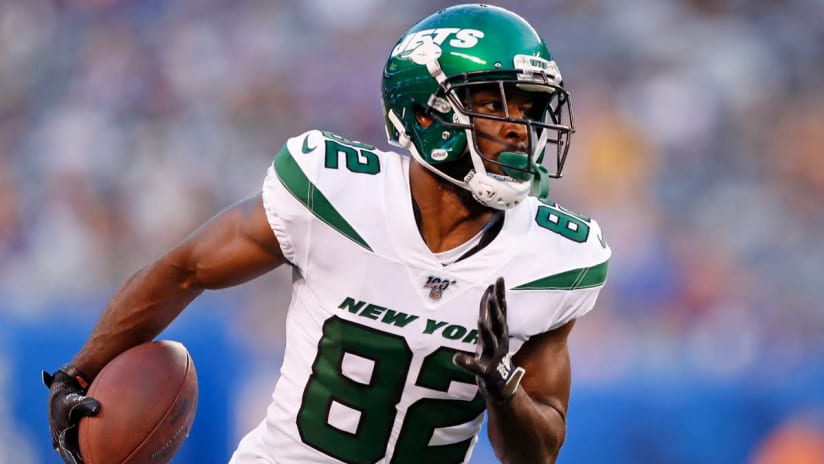
Los Angeles Chargers Slot Receiver
Of the receivers who actually qualified, Nelson Agholor of the Eagles was quietly efficient and had just two drops in the slot last season — which would go against several memes on the subject. Buffalo’s Cole Beasley just missed the cut, through he was one of several receivers on the Bills’ roster who didn’t always get the accuracy and efficiency they deserved from quarterback Josh Allen. And though Randall Cobb was productive for the Cowboys last season and should be so for the Texans in 2020, his nine drops as a slot man… well, we can only have one guy with nine slot drops on this list. More on that in a minute.
Now, on to the top 11.
Willie Snead IV Julian Edelman Tyler Boyd Jared Cook Golden Tate Keenan Allen Larry Fitzgerald Allen Robinson Cooper Kupp Chris Godwin Tyler Lockett